

EB-1 Visa Explained: Requirements, Benefits, and Application Process
Why the EB-1 Visa Matters for High-Achievers
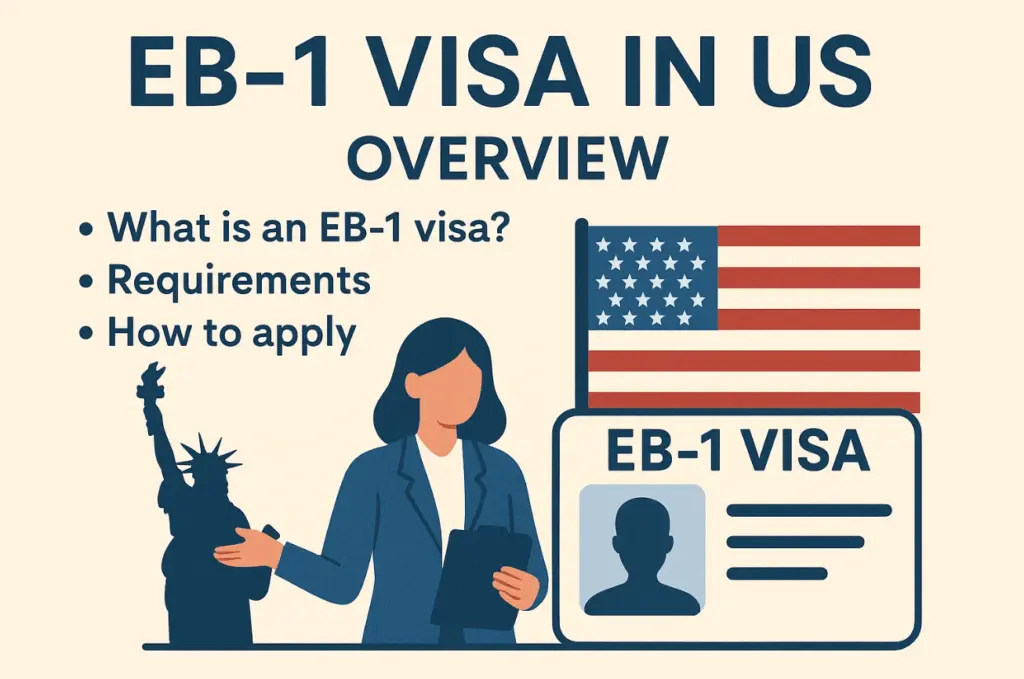
Have you won international awards? Published important research? Managed a company across countries? If so, you might qualify for a green card based on extraordinary achievement, known as the EB-1 visa. This immigration option is like the “fast lane” to permanent residency because it skips many of the usual steps.
In this article, we’ll explain what an EB-1 visa is, who it’s for, and how you can begin your application process with the guidance of Law Group International.
EB-1 Visa Categories
EB-1A – People with Extraordinary Ability
This category is for individuals with national or international recognition in areas like science, art, education, business, or athletics.
You don’t need a job offer to qualify.
Example: A scientist with global awards, a renowned painter, or an Olympic athlete.
EB-1B – Outstanding Professors and Researchers
This is for people with at least 3 years of teaching or research experience who are being offered a permanent (tenure-track) job in the U.S.
Example: A professor with published academic work or a lead researcher.
EB-1C – Multinational Executives or Managers
This option is for high-level employees being transferred from a company abroad to a U.S. office.
You’ll need documentation like:
- A letter from your employer
- Company organizational chart
- Proof of executive or managerial duties
See more details on the USCIS EB-1 overview page.
Main Benefits of the EB-1 Green Card
You Don’t Need PERM Labor Certification
PERM is a process where employers prove there are no qualified U.S. workers for the position. It usually takes 6–12 months. The EB-1 visa lets you skip it, saving time and effort.
Premium Processing Available
You can pay extra for Form I-907 to get a faster decision on your I-140 petition, often within 15 calendar days.
Get full details in the USCIS Policy Manual, Chapter 4.
Application Process Overview
Steps to File the EB-1 Visa (Form I-140)
- Collect your supporting documents (awards, publications, job offers).
- Complete and sign Form I-140.
- Optional: Submit Form I-907 for premium processing.
- Translate any non-English documents.
- Submit the package to USCIS.
- Wait for your USCIS notification.
Tip: Don’t forget required translations and evidence—it’s a common mistake.
Adjustment of Status vs. Consular Processing
| Adjustment of Status (Form I-485) | Consular Processing (Form DS-260) |
| Apply from within the U.S. | Apply from abroad at a U.S. consulate |
| May qualify for work/travel permits | Must wait for visa approval to enter |
| Usually takes longer but avoids travel risks | Can be faster, but exiting the U.S. has consequences |
Read our Green Card Comparison Guide for more details.
Next Steps with Law Group International
How to Book a Consultation
Click here to schedule a free 15-minute call. During this call, you’ll:
- Find out if the EB-1 fits your case
- Get answers to your top questions
- Learn what the next steps look like
A Smarter Way to Residency
Now that you know what an EB-1 visa is, you can start planning your immigration path. If you’re a high-achieving professional, executive, or researcher, this visa might be your fastest and most efficient route to a green card.
At Law Group International, we help clients build winning cases, file accurate paperwork, and stay on track. Don’t take chances, get expert help from attorneys who understand how to turn your achievements into immigration success.