


Know your rights with ICE: a complete guide to protecting yourself
With immigration enforcement at record levels in 2026, knowing your constitutional rights has never been more critical. Across the country, families are facing increased operations by ICE at homes, workplaces, and in public spaces. For many immigrants, documented and undocumented alike, this has created fear, confusion, and uncertainty.
But here is the most important thing to understand: you have rights.
Your constitutional protections do not depend on your immigration status. They apply to everyone in the United States. When you know what to say, what not to do, and how to respond calmly, you can protect yourself and your family from making mistakes that could harm your case.
This guide from Law Group International will walk you through:
- Your core constitutional rights
- What to do if ICE comes to your door
- Your rights at work
- What to do during traffic stops or public encounters
- How to create a family emergency plan
Knowledge is protection. Preparation is power.
Constitutional Rights That Protect Everyone
The U.S. Constitution provides protections that apply to all people inside the country, regardless of immigration status.
Right to Remain Silent (5th Amendment)
You have the right to remain silent. You do not have to answer questions about:
- Where you were born
- Your immigration status
- How you entered the U.S.
You can say:
“I am exercising my right to remain silent.”
Do not lie and do not provide false documents. Simply remain silent.
Right to Refuse Consent to Search (4th Amendment)
ICE cannot enter your home without:
- A judicial warrant signed by a judge, or
- Your permission
You have the right to say:
“I do not consent to entry.”
This applies to your home and to searches of your belongings.
Right to an Attorney
You have the right to speak with an immigration attorney before signing anything. Never sign documents you do not understand, especially voluntary departure forms.
Right to a Hearing Before an Immigration Judge
In most cases, you have the right to see an immigration judge before being deported. Do not let anyone convince you that you must leave immediately without speaking to a lawyer.
These rights apply to everyone, not just U.S. citizens.
If ICE Comes to Your Door: Step-by-Step Guide
If ICE comes to your home, do not open the door.
Opening the door can be interpreted as giving consent for officers to enter.
Step 1: Stay Calm and Keep the Door Closed
You can speak through the door.
Step 2: Ask for a Warrant
Say:
“Please slide the warrant under the door.”
Look for:
- Your correct name and address
- A judge’s signature
If it is only an ICE administrative warrant, it does not allow them to enter your home.
Step 3: Use Clear Language
Say:
- “I do not consent to entry.”
- “I am exercising my right to remain silent.”
Step 4: Do Not Sign Anything
Do not sign documents without speaking to an attorney.
Step 5: If They Enter Anyway
Do not resist.
Do not run.
State: “I do not consent to this entry.”
This protects your legal rights later.
If ICE Comes to Your Workplace
Your rights at work depend on whether you are in a public or private area.
Public Areas
ICE can enter areas open to the public without a warrant (for example, a lobby or dining area).
Private Areas
They need a judicial warrant to enter private employee-only spaces.
What You Should Do
- Stay calm
- Do not run
- You may walk calmly to a private area if allowed
- Do not answer questions about your immigration status
You can say:
“I am exercising my right to remain silent.”
Employer Limitations
Employers cannot:
- Force you to answer ICE questions
- Provide false information
They may be required to provide I-9 records if presented with proper documentation.
If ICE Stops You in Public or During a Traffic Stop
If you are driving, you must provide:
- Driver’s license
- Registration
- Proof of insurance
You do not have to answer questions about:
- Your immigration status
- Your country of origin
You can ask:
“Am I free to go?”
If the officer says yes, walk away calmly.
If you are detained, you still have the right to remain silent and to request an attorney.
Printable Know Your Rights Card
A Know Your Rights card is a simple but powerful tool.
It typically includes:
- A statement that you are exercising your right to remain silent
- A statement that you do not consent to searches
- A request to speak with an attorney
You can:
- Keep it in your wallet
- Show it through your door if ICE is outside
- Hand it to an officer during an encounter
Law Group International provides a downloadable Know Your Rights card you can print and carry with you at all times.
Creating a Family Emergency Plan
Preparation can protect your children, your finances, and your legal case.
Designate an Emergency Contact
Choose someone with legal status who can:
- Pick up your children
- Access important documents
- Contact your attorney
Prepare Childcare Authorization
Have a notarized document allowing a trusted person to care for your children if you are detained.
Organize Important Documents
Keep copies of:
- Passports
- Birth certificates
- Immigration paperwork
- Medical records
Store them in a safe, accessible place.
Have an Emergency Attorney Contact
Memorize or carry the contact information for your immigration attorney.
Law Group International offers emergency consultations for detention and deportation defense cases.
Knowledge Is Your Best Protection
ICE enforcement can be intimidating, but fear should never replace preparation. When you know your rights, you reduce the risk of making decisions that could harm your case.
Remember:
- You have the right to remain silent
- You do not have to open your door without a judicial warrant
- You have the right to speak to an attorney
- You have the right to a hearing before a judge in most cases
If you or a loved one is facing detention or deportation proceedings, the deportation defense attorneys at Law Group International are here to help.
Attorneys Khalid and Daniela represent clients across Virginia, Washington, DC, and Maryland.
Call (703)5495445 for an emergency consultation or schedule a confidential appointment at Law Group International.
You do not have to face this alone.
Explore More Immigration Topics
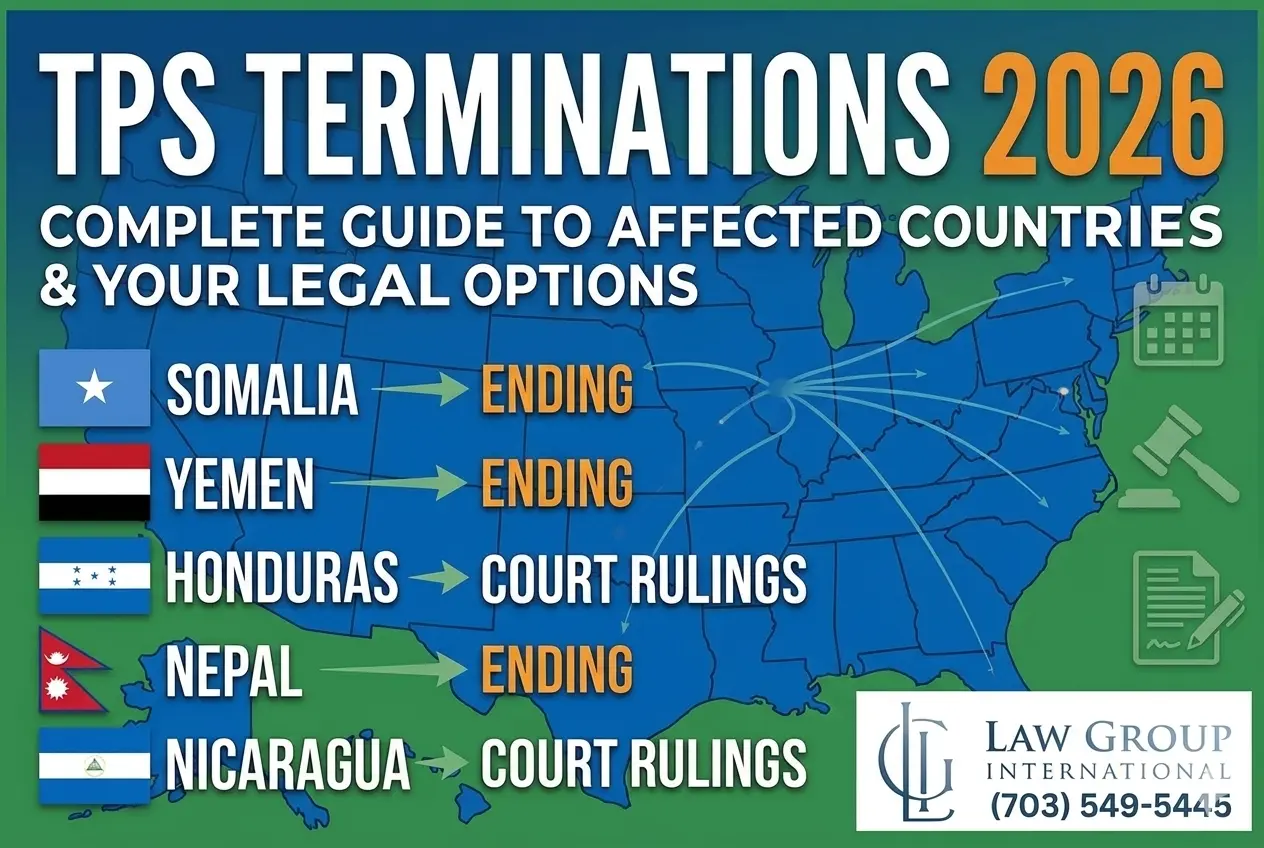
TPS Terminations in 2026
March 9, 2026
Habeas Corpus and Immigration
March 2, 2026
Green Card Holder Rights at U.S. Ports of Entry
February 28, 2026
75-Country Visa Suspension
February 27, 2026

Public Charge Rule in 2026
February 19, 2026

VAWA Immigration: Protection for Victims of Domestic Violence
January 28, 2026
U-Visa and Deportation: How This Visa Can Save Your Case
January 19, 2026
U-Visa requirements 2026: Complete eligibility guide
January 13, 2026