


Habeas Corpus and Immigration: How This Constitutional Right Protects You
In 2026, habeas corpus, one of the oldest constitutional protections in the world, is at the center of the national immigration debate. News reports, congressional hearings, and public statements from federal officials have brought renewed attention to a legal concept that, for many detained immigrants, can mean the difference between freedom and prolonged detention.
Why does this matter now? Immigration enforcement has increased, and more individuals are being held in detention facilities for extended periods while their cases move through the system. At the same time, policymakers and legal scholars are discussing the scope of constitutional protections for people in immigration custody. This has led to growing public interest in one critical question: Can someone challenge immigration detention in federal court?
The answer is often yes, through a legal action called a writ of habeas corpus.
This guide from Law Group International explains:
- What habeas corpus means in simple terms
- How it applies in immigration cases
- When detention may be unlawful
- How a habeas corpus attorney can help
- When to take urgent legal action
Understanding this right is essential if you or a loved one is currently detained. Time is often a critical factor in habeas cases, and early legal intervention can make a significant difference.
What is Habeas Corpus? A Simple Explanation
Habeas corpus is a Latin phrase that means “you shall have the body.” In legal terms, it is a court order that requires the government to justify why a person is being detained.
This protection dates back to the Magna Carta of 1215, became part of English common law, and was later included in the U.S. Constitution in Article I, Section 9. Its core purpose is simple: The government cannot hold someone indefinitely without a lawful reason.
A helpful analogy is to think of habeas corpus as a receipt requirement. If the government detains you, it must show a valid legal basis for doing so. If it cannot, a federal judge can order your release.
Key points:
- It is a constitutional protection
- It allows a federal court review of detention
- It applies to more than criminal cases, it can apply in immigration detention
Many people search for “habeas corpus meaning” or “what is habeas corpus” because the term sounds complex, but the concept is straightforward: You have the right to challenge unlawful detention.
How Habeas Corpus Protects Immigrants
Habeas corpus plays a crucial role in immigration law because immigration detention is civil, not criminal. That means some of the procedural protections in criminal court do not automatically apply, but constitutional safeguards still exist.
A habeas corpus attorney can file a petition in federal district court arguing that a person’s detention violates the Constitution or federal law.
Common situations where habeas corpus may apply include:
Prolonged Detention Without a Bond Hearing
If someone has been detained for many months without an opportunity to request bond, federal courts may review whether the detention has become unconstitutional.
Detention Beyond the Removal Period
Under the Supreme Court case Zadvydas v. Davis, the government generally cannot detain someone indefinitely after a final order of removal if deportation is not reasonably foreseeable.
Expedited Removal Without Proper Screening
If a person with a credible fear of persecution was not given the required screening, a habeas petition may challenge that process.
Constitutional Violations
Examples include:
- Arresting the wrong person
- Detaining someone without legal authority
- Denying access to legal counsel in ways that violate due process
Another key case, Boumediene v. Bush, confirmed that habeas corpus is a fundamental constitutional protection, even in complex detention contexts.
A habeas corpus lawyer can evaluate whether detention is lawful and ask a federal judge to order release or a bond hearing.
Habeas Corpus in 2026: What is Happening Now?
Habeas corpus has received increased attention in 2026 due to public discussions among federal policymakers about the scope of detention authority and constitutional limits.
Some officials have raised questions about the theoretical power to suspend habeas corpus in certain national security contexts. Others, including members of Congress, have stated that such a suspension would be unlikely.
Here are the key constitutional facts:
- The U.S. Constitution allows suspension of habeas corpus only in cases of rebellion or invasion
- The authority to suspend rests with Congress, not the president
- Historically, habeas corpus was controversially suspended during the Civil War under President Lincoln
Legal scholars widely agree that outside of those narrow circumstances, habeas corpus remains fully in force.
For immigrants and their families, the most important takeaway is practical: Federal courts continue to hear habeas petitions challenging immigration detention.
How to File a Writ of Habeas Corpus
A writ of habeas corpus is a formal legal petition filed in federal district court.
Who Can File
- The detained person
- A family member or legal representative on their behalf
What the Petition Argues
It claims that the detention:
- Violates the Constitution
- Violates federal immigration law
- Has become unreasonably prolonged
What Happens After Filing
- The federal court reviews the petition
- The government must respond and justify the detention
- A judge may order:
- Release
- A bond hearing
- Further legal review
Timeline
Some habeas cases move quickly, especially in medical emergencies or clear legal violations, while others may take several weeks or months.
Why You Need a Habeas Corpus Attorney
Habeas litigation involves:
- Federal court procedures
- Complex jurisdictional rules
- Strict filing requirements
- Constitutional legal arguments
Working with an experienced habeas corpus law firm significantly increases the likelihood that the petition is properly prepared and filed on time.
Law Group International handles federal litigation and can evaluate whether a habeas petition is appropriate in a specific detention case.
When Should You Contact a Habeas Corpus Lawyer?
You should speak with a habeas corpus attorney immediately if you or a loved one:
- Has been detained for six months or more without a bond hearing
- Remains detained after a removal order that cannot be executed
- Was placed in expedited removal without a proper credible fear interview
- Was arrested or detained unlawfully
- Is facing serious medical issues that are not being addressed in detention
- Has been denied basic due process protections
In many of these situations, time is critical. Delays can prolong detention unnecessarily.
Frequently Asked Questions About Habeas Corpus
Can habeas corpus be suspended?
Only Congress can suspend habeas corpus, and only in cases of rebellion or invasion. It is an extremely rare and limited power.
Does habeas corpus apply to non-citizens?
Yes, with some limitations. Federal courts can review immigration detention through habeas petitions.
How long does a habeas petition take?
It varies. Emergency petitions may move quickly, while others can take longer depending on the court and the legal issues involved.
Habeas corpus vs. an appeal: what is the difference?
An appeal challenges a legal decision in a case.
A habeas petition challenges the lawfulness of detention itself.
How much does a habeas corpus attorney cost?
Costs vary based on case complexity, urgency, and federal court litigation requirements. Many law firms offer consultations to evaluate whether habeas relief is appropriate.
A Critical Constitutional Protection
Habeas corpus is a fundamental constitutional safeguard that helps ensure no one, regardless of immigration status, is held without legal justification.
For detained immigrants, it can provide:
- A path to federal court review
- A challenge to prolonged detention
- A possible bond hearing or release
If you or a loved one is currently in immigration detention and you believe the detention is unlawful, time is critical.
The federal litigation attorneys at Law Group International have experience filing habeas corpus petitions in federal court and challenging unlawful detention.
Explore More Immigration Topics

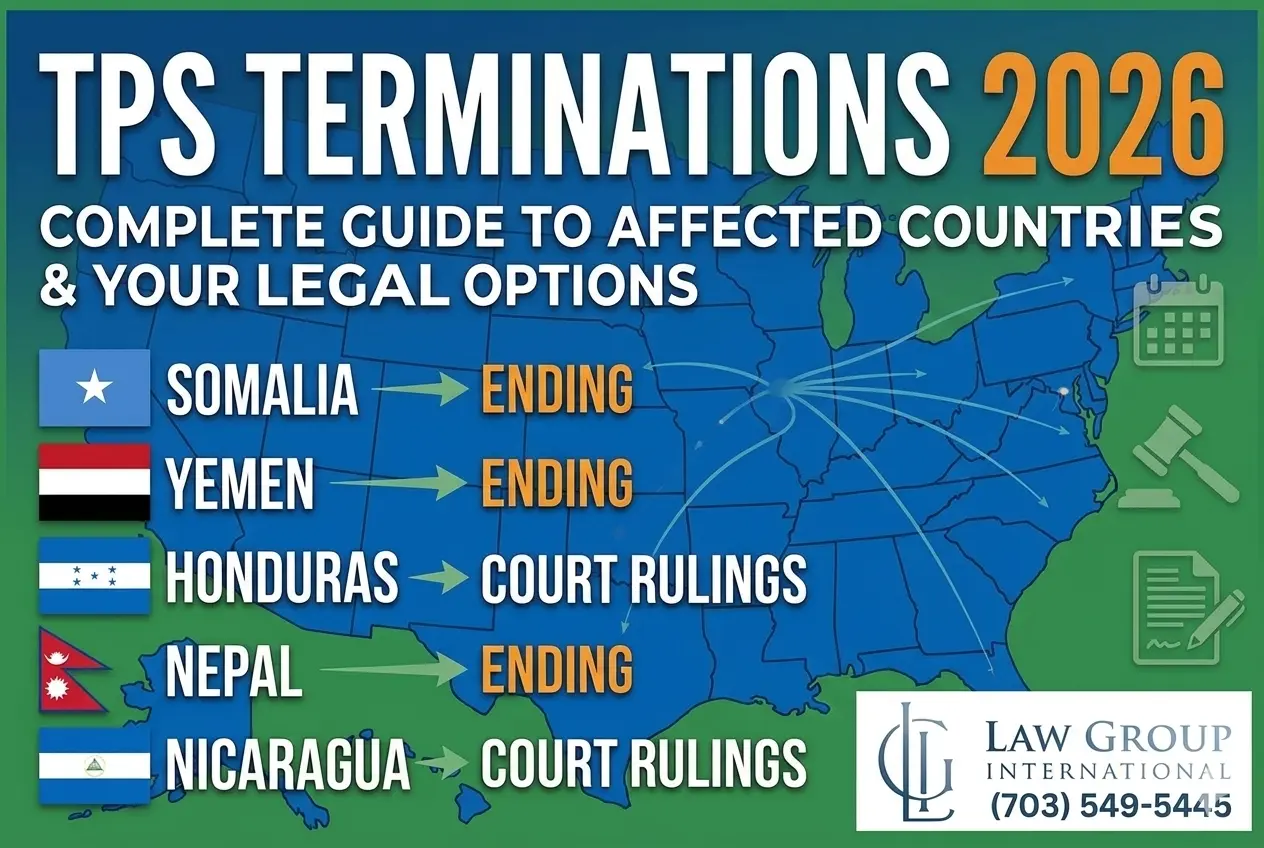
TPS Terminations in 2026
March 9, 2026
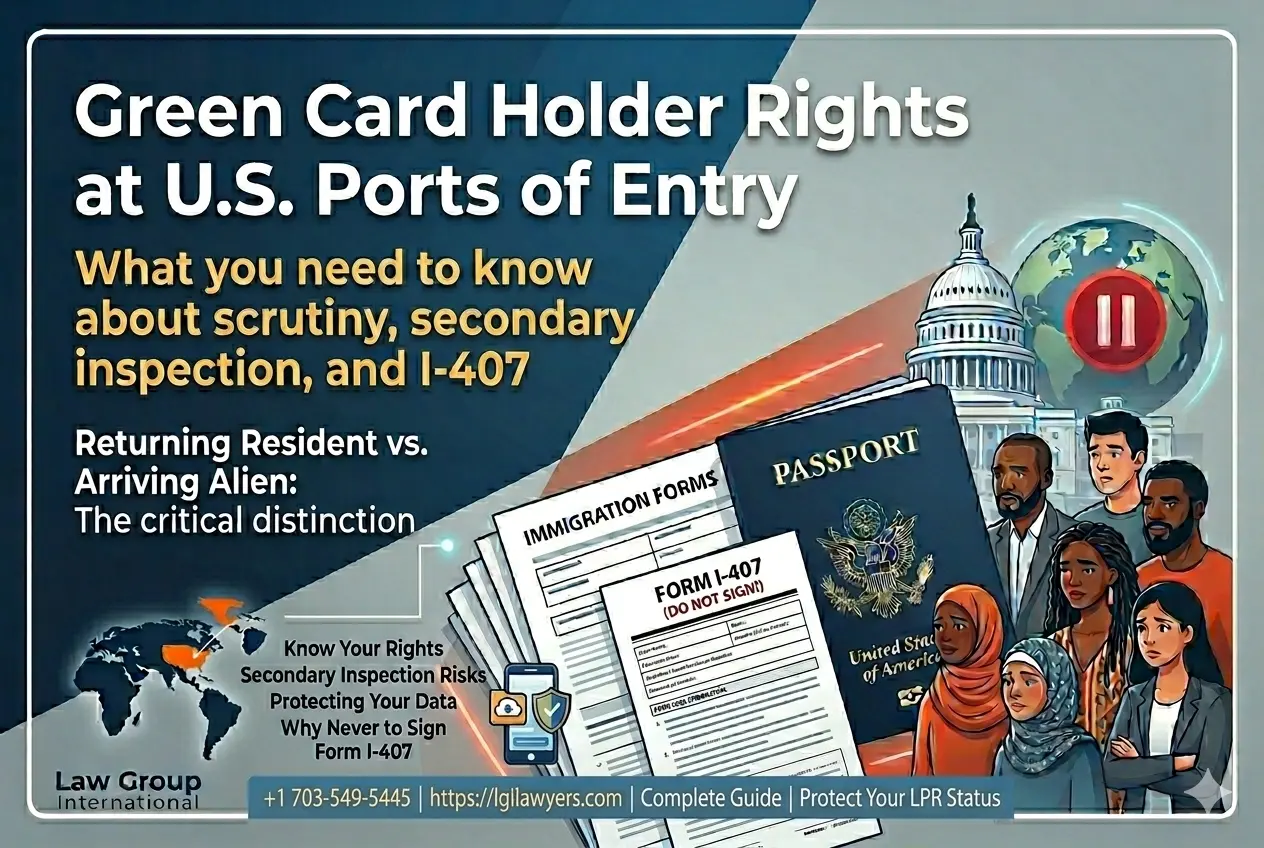
Green Card Holder Rights at U.S. Ports of Entry
February 28, 2026

75-Country Visa Suspension
February 27, 2026

Public Charge Rule in 2026
February 19, 2026

Know Your Rights with ICE: A Complete Guide
February 17, 2026

VAWA Immigration: Protection for Victims of Domestic Violence
January 28, 2026
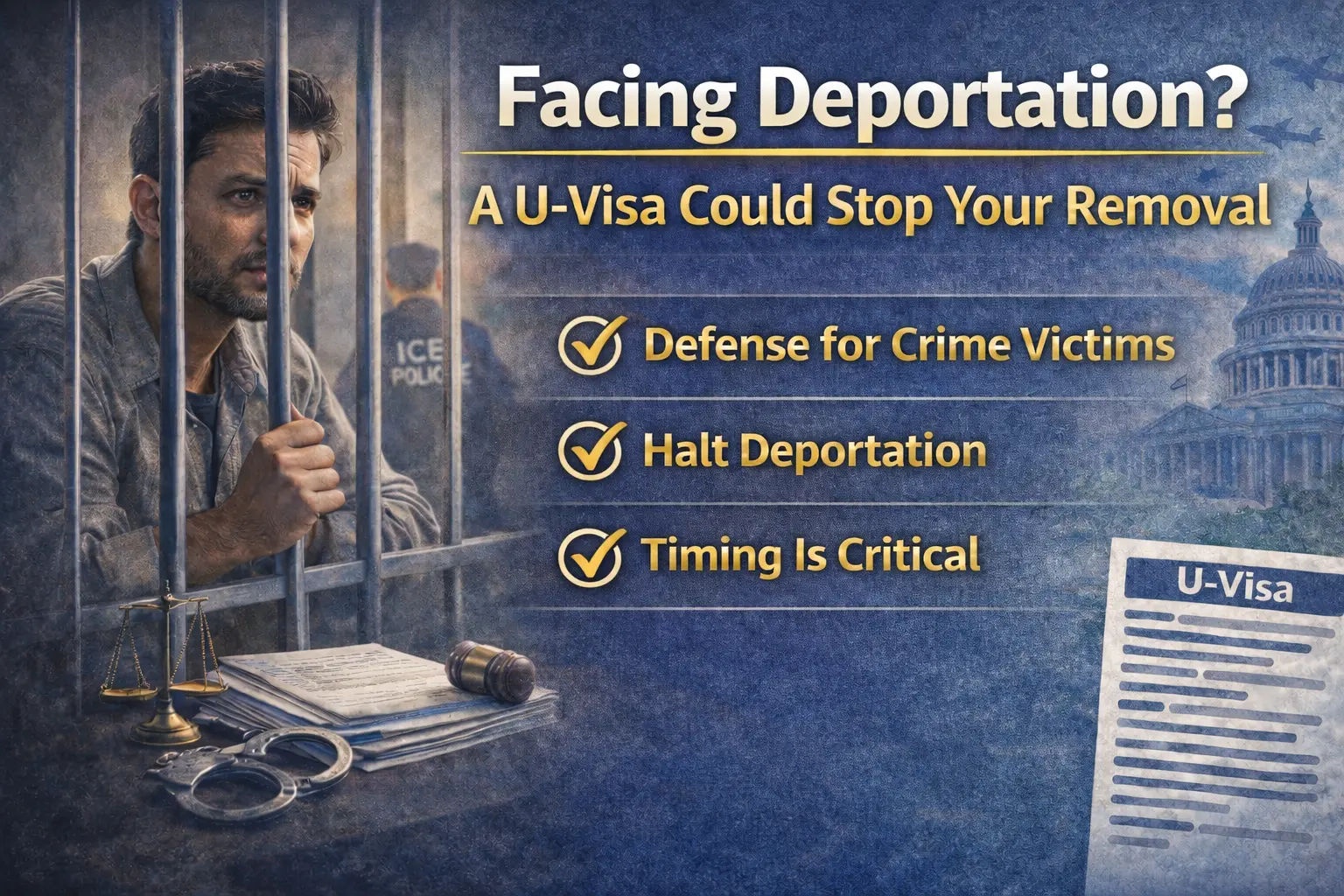
U-Visa and Deportation: How This Visa Can Save Your Case
January 19, 2026

U-Visa requirements 2026: Complete eligibility guide
January 13, 2026