


U-Visa for Crime Victims: Complete Guide
If you’ve been the victim of a crime in the United States, you may have a path to legal immigration protection, even if you are undocumented. Many crime victims stay silent out of fear: fear of deportation, fear of retaliation, or fear that coming forward will only make things worse. You are not alone in feeling this way.
Congress created the U-Visa specifically to protect crime victims who have suffered harm and who are willing to help law enforcement. It exists to ensure that victims can seek justice without risking their immigration future.
At Law Group International, our immigration attorneys work with crime victims across Virginia, Washington DC, and Maryland, helping them understand their rights and options in a safe, confidential environment.
What Is the U-Visa?
The U-Visa, formally known as U nonimmigrant status, is a special immigration benefit created by Congress in 2000 under the Victims of Trafficking and Violence Protection Act (VTVPA).
Congress designed the U-Visa with two clear goals:
- To protect victims of serious crimes who have suffered substantial physical or mental abuse
• To strengthen law enforcement by encouraging victims to report crimes and cooperate without fear of deportation
Importantly, the U-Visa is available regardless of your immigration status. It was created with undocumented victims in mind, people who might otherwise be too afraid to come forward.
There is, however, an annual limit: Congress caps U-Visas at 10,000 approvals per year. Because demand is much higher, most applicants are placed on a waitlist. While this creates delays, protections are still available while you wait.
What the U-Visa is not:
• It is not a tourist visa
• It is not a work visa
• It is not a family-based petition
It is a humanitarian immigration benefit for crime victims.
It is also different from other protections like the T-Visa (human trafficking) or VAWA (abuse by a U.S. citizen or permanent resident family member), which are covered separately.
Who Qualifies for a U-Visa?
To qualify for a U-Visa, you must meet four legal requirements:
- You are a victim of a qualifying crime that occurred in the United States or violated U.S. law.
- You suffered substantial physical or mental abuse as a result of that crime.
- You possess information about the criminal activity.
- You have been, are being, or are likely to be helpful to law enforcement in the investigation or prosecution of the crime.
Who Is Considered a “Victim”?
U-Visa protection is broader than many people realize. A “victim” may include:
- Direct victims: the crime was committed against you
• Indirect victims: a close family member was harmed and you suffered as a result
• Bystanders: you were injured or traumatized while witnessing a crime
Important Clarifications
- Being undocumented does NOT disqualify you
• The crime may have happened years ago, there is no strict filing deadline
• A criminal conviction is not required
Examples
- Maria was assaulted by her boyfriend and cooperated with police. She may qualify for a U-Visa.
• Juan witnessed a violent workplace assault, gave a statement, and later developed severe anxiety. He may qualify as a bystander victim.
Qualifying Crimes for a U-Visa
The law includes 26+ qualifying criminal activities, including attempts, conspiracies, or solicitations to commit them.
Violent Crimes
- Murder
• Manslaughter
• Felonious assault
• Rape
• Sexual assault
• Abusive sexual contact
• Torture
• Kidnapping
• Abduction
• Hostage-taking
Domestic and Relationship-Based Crimes
- Domestic violence
• Incest
• Stalking
Exploitation and Human Rights Violations
- Human trafficking
• Involuntary servitude
• Peonage
• Slave trade
• Prostitution (when connected to trafficking)
• Sexual exploitation
Fraud, Coercion, and Abuse of Power
- Blackmail
• Extortion
• Fraud in foreign labor contracting
Other Qualifying Crimes
- False imprisonment
• Unlawful criminal restraint
• Witness tampering
• Obstruction of justice
• Perjury
• Female genital mutilation (FGM)
Crimes charged under state law also qualify if they are substantially similar to these offenses. For example, state-level assault or domestic violence charges often qualify.
If you’re unsure whether your situation qualifies, speak with an immigration attorney. Many crimes that don’t seem “serious enough” actually do qualify.
U-Visa Application Process
Applying for a U-Visa is detailed, but manageable with proper guidance.
Step 1: Law Enforcement Certification (Form I-918 Supplement B)
This is the most critical document. A certifying official must confirm that you were helpful, are helpful, or are likely to be helpful.
Certifying agencies may include:
• Police departments
• Prosecutors
• Judges
• Federal, state, or local agencies
• EEOC, Department of Labor, or Child Protective Services
If one agency refuses, another may still certify.
Step 2: Gather Supporting Evidence
- Police reports (if available)
• Medical records
• Therapy or counseling records
• Photos of injuries
• Witness statements
• Protective orders
Police reports are helpful, but not required.
Step 3: File Form I-918
This includes a detailed personal statement describing:
• What happened
• How it affected you
• How you helped law enforcement
Step 4: Apply for Work Authorization
Form I-765 can be filed so you may work legally while waiting.
Step 5: Submit to USCIS
All U-Visa applications are filed with the Vermont Service Center.
Processing Reality
Due to the annual cap, wait times are currently 4-5+ years.
While waiting, approved applicants receive deferred action, which provides protection from deportation.
Working with an experienced immigration attorney significantly improves organization, accuracy, and overall approval chances.
Benefits of a U-Visa
U-Visa protection offers meaningful, life-changing benefits:
- Legal status in the U.S. for 4 years (renewable)
• Work authorization, Social Security number, and driver’s license eligibility
• Protection from deportation while your case is pending
• Ability to include qualifying family members:
• Spouse
• Unmarried children under 21
• If under 21: parents and unmarried siblings under 18
• Path to a green card after 3 years of continuous presence
• USCIS may waive certain immigration violations or criminal issues
• International travel possible with advance parole approval
For many victims, the U-Visa means the ability to live without fear, to work legally, support their families, and eventually become permanent residents of the country where they were harmed but also protected.
U-Visa FAQs
Can I apply if I’m undocumented?
Yes. The U-Visa was created specifically to protect crime victims regardless of immigration status.
What if the abuser was never arrested or convicted?
A conviction is not required. Cooperation with law enforcement is what matters.
How long does the process take?
Wait times are currently 4-5+ years due to the cap, but deferred action and work authorization are available while waiting.
Can my family apply with me?
Yes. Qualifying family members can be included as derivative beneficiaries.
What if police refuse to sign the certification?
Other agencies may certify. An attorney can help identify the right agency.
Can I travel with a U-Visa?
Yes, but only with advance parole approval.
What happens after 4 years?
You may apply for a green card after 3 years of continuous presence in U-Visa status.
Protection, Dignity, and a Path Forward
The U-Visa offers real protection for crime victims: legal status, work authorization, family unity, and a path to permanent residence. The crime happened to you. You should not be punished for coming forward.
The immigration attorneys at Law Group International, including Khalid Shekib and Daniela Lucena, have helped crime victims throughout Virginia, Washington DC, and Maryland obtain U-Visa protection.
Every case is unique.
Schedule your free, confidential consultation today to discuss your options.
Spanish-speaking services available.
Explore More Immigration Topics
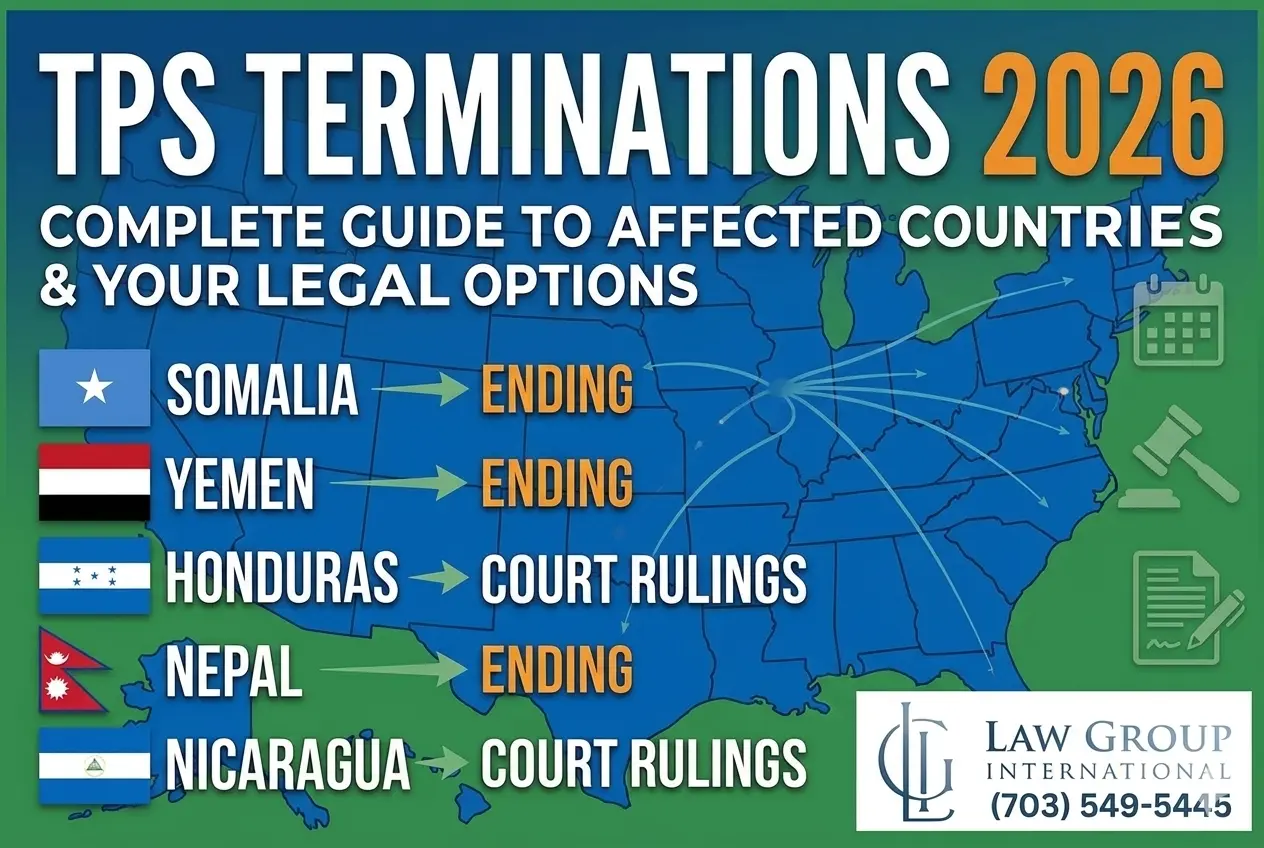
TPS Terminations in 2026
March 9, 2026
Habeas Corpus and Immigration
March 2, 2026
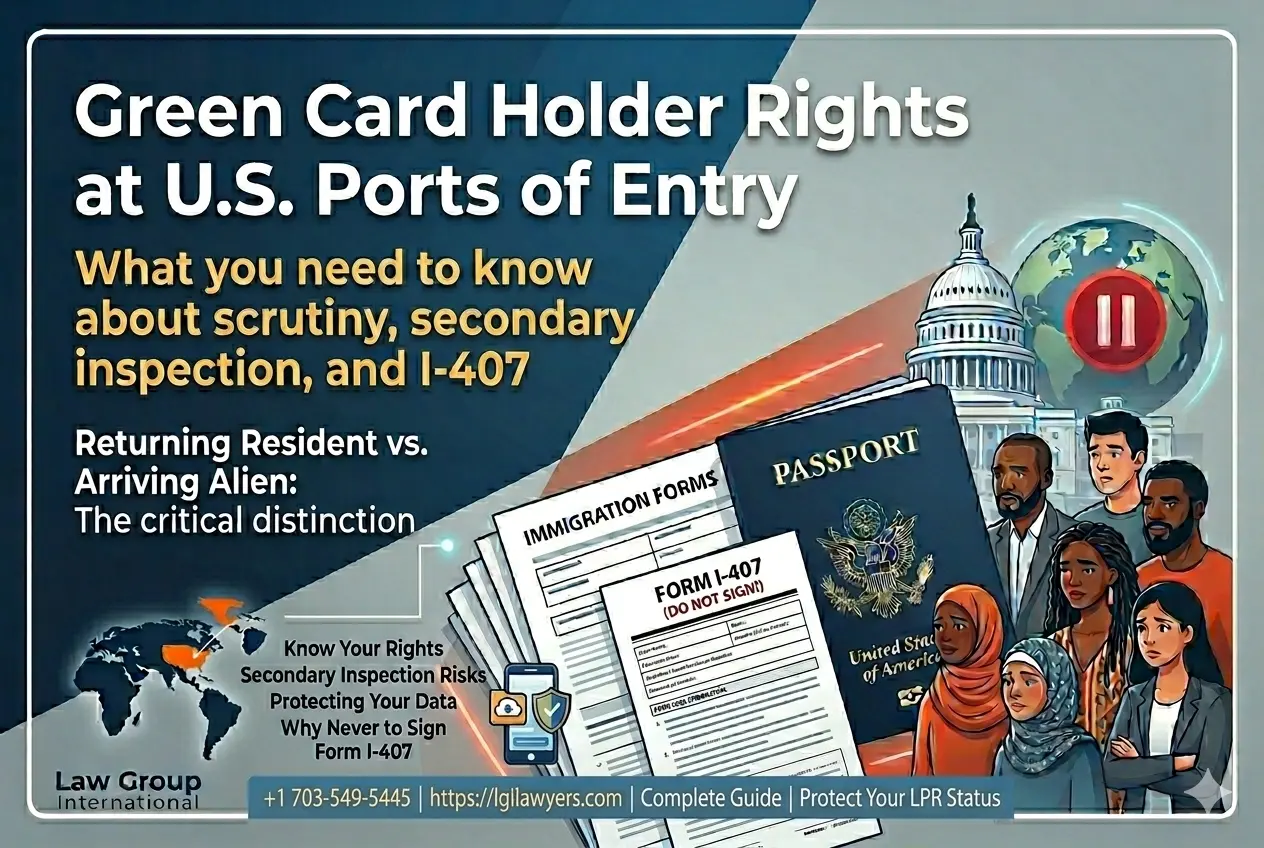
Green Card Holder Rights at U.S. Ports of Entry
February 28, 2026
75-Country Visa Suspension
February 27, 2026
Public Charge Rule in 2026
February 19, 2026
Know Your Rights with ICE: A Complete Guide
February 17, 2026

VAWA Immigration: Protection for Victims of Domestic Violence
January 28, 2026
U-Visa and Deportation: How This Visa Can Save Your Case
January 19, 2026
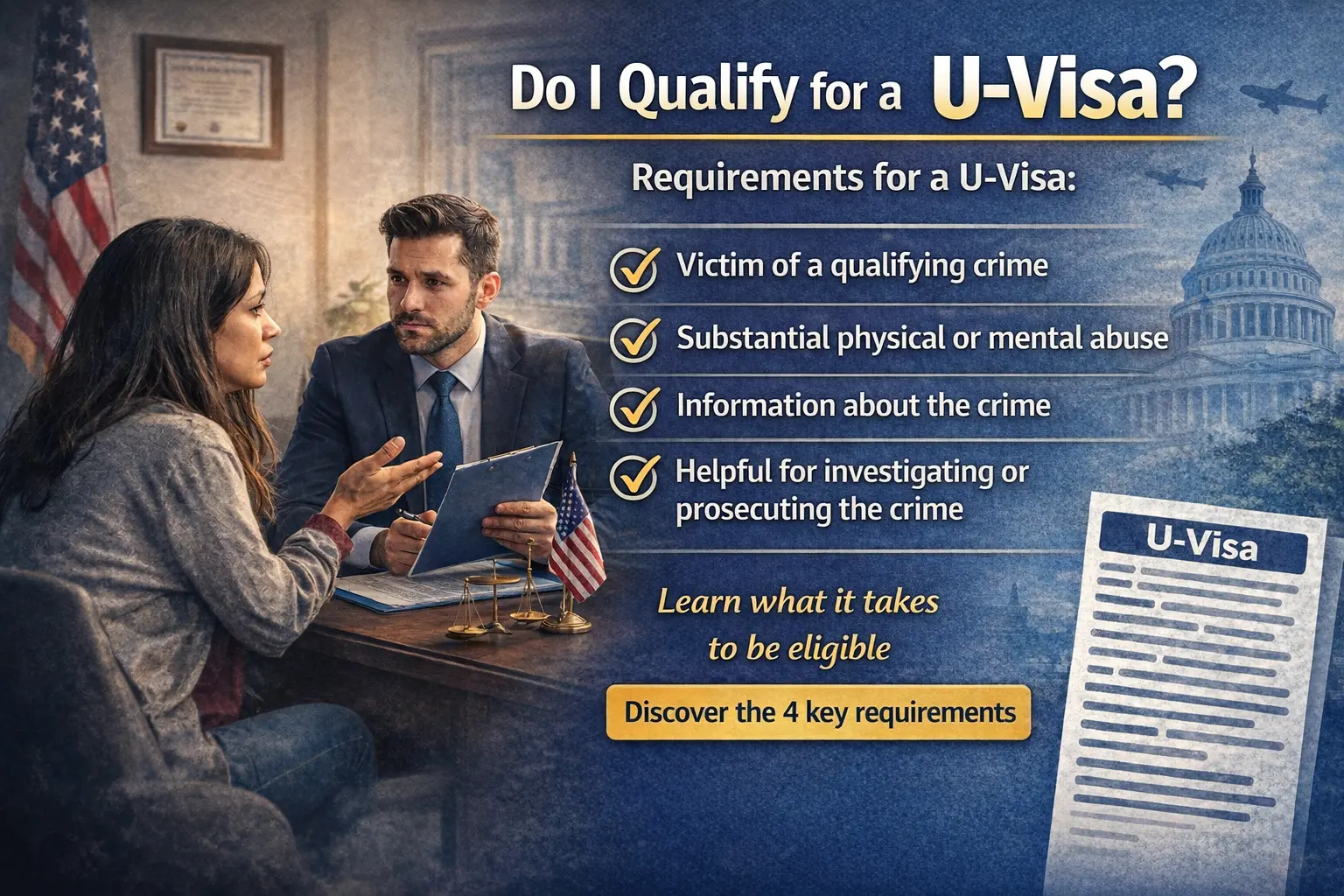
U-Visa requirements 2026: Complete eligibility guide
January 13, 2026
Immigration Policy in 2026
January 1, 2026