


ICE Detention in 2026: Your Rights, How to Find a Detainee, and Legal Options
Immigration detention in the United States has reached historic levels in 2026. Recent reports indicate that more than 73,000 people are currently being held in ICE detention facilities across the country, the highest number ever recorded.
At the same time, the federal government has expanded funding for detention capacity, including plans to increase available detention beds nationwide and open new large-scale facilities. One of these facilities is located in Hagerstown, Maryland, which has drawn significant attention from immigrant communities in the Mid-Atlantic region.
For families, detention can be one of the most frightening moments in the immigration process. A person may be taken into custody unexpectedly during an ICE arrest, after a traffic stop, or following a court hearing. Loved ones are often left asking urgent questions:
Where are they being held?
Can they be released?
What legal rights do they have?
Understanding your rights in immigration detention can make a critical difference in how a case unfolds. Even though immigration proceedings are civil, not criminal, individuals in ICE custody still have important legal protections.
In this guide, Law Group International explains:
- What is happening with ICE detention in 2026
- The legal rights you have if detained
- How to locate someone in immigration detention
- When bond hearings may allow release
- How habeas corpus can be used to challenge prolonged detention
If you or someone you care about has been detained by ICE, knowing these steps can help you respond quickly and protect your legal options.
What is Happening with ICE Detention in 2026?
Immigration detention has expanded significantly in 2026 due to new federal funding and enforcement priorities.
Recent legislation approved funding for tens of thousands of additional detention beds, increasing total national detention capacity to approximately 92,600 beds. This expansion is intended to support increased immigration enforcement and ensure space to hold individuals while their cases move through immigration court.
As a result, detention numbers have risen rapidly. In recent months, the daily detained population has surpassed 73,000 individuals, a number significantly higher than previous years.
The expansion includes the opening of several large detention facilities, sometimes referred to as “mega-detention centers.” One facility receiving attention in the Mid-Atlantic region is located in Hagerstown, Maryland, placing additional detention capacity near communities in Maryland, Virginia, and Washington DC.
For many immigrants, detention occurs after:
- An ICE arrest during an enforcement operation
- A traffic stop or interaction with local law enforcement
- A missed immigration court hearing
- A transfer from a local jail after criminal charges
Once a person enters ICE custody, they may be transferred between facilities, sometimes across state lines, while their case proceeds.
Because detention policies and enforcement priorities can change quickly, immigrants and their families should understand their legal rights and possible pathways to release.
Your Rights If You Are Detained by ICE
Being detained by ICE does not mean you lose all legal protections. Individuals in immigration detention still have important rights under U.S. law.
The Right to an Attorney
You have the right to be represented by an immigration attorney during your case. However, the government does not provide a free lawyer in immigration court. This means detainees must hire their own attorney or seek help from nonprofit legal organizations.
An experienced immigration attorney can help evaluate possible defenses against deportation, request bond hearings, and represent you in court.
The Right to Know the Charges Against You
If ICE detains you, you should receive a Notice to Appear (NTA) or other documents explaining the immigration charges against you. These documents begin the removal proceedings in immigration court.
You have the right to understand the allegations and challenge them before an immigration judge.
The Right to Make Phone Calls
Detainees generally have access to telephones in detention facilities. This allows them to contact family members, legal representatives, or consulates from their home country.
Because phone access may be limited, it is important to memorize key phone numbers whenever possible.
The Right to Request a Bond Hearing (If Eligible)
Some detainees may request a bond hearing before an immigration judge, where the judge decides whether the person can be released while their case continues.
Bond eligibility depends on several factors, including criminal history and the type of immigration case.
For a full explanation of how bond hearings work, see our guide.
The Right to Medical Care
Detention facilities are required to provide basic medical care to detainees. If a person has a medical condition, they can request treatment through the facility’s medical services.
The Right to Challenge Unlawful Detention
In some cases, individuals held in immigration detention may challenge their detention through a legal action called habeas corpus, particularly when detention becomes prolonged or unlawful.
You can learn more in our complete guide about what is habeas corpus .
For a broader overview of your legal protections during immigration enforcement actions, you can also review our article Know your rights with ICE: a complete guide to protecting yourself
How to Find Someone Detained by ICE
When someone is detained by ICE, family members often struggle to locate them quickly. Fortunately, there are several ways to find out where a person is being held.
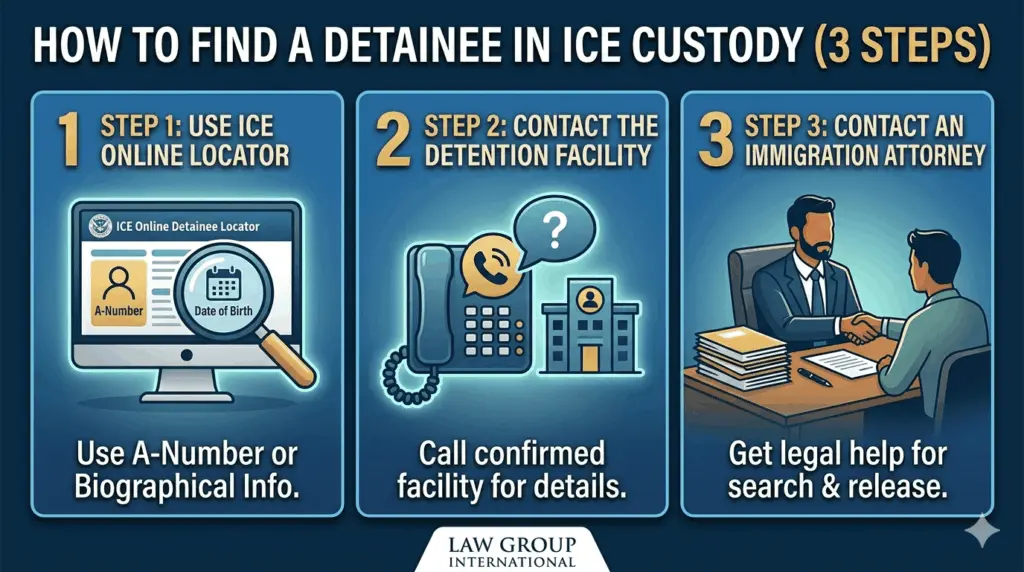
Step 1: Use the ICE Online Detainee Locator
ICE provides an Online Detainee Locator System (ODLS) that allows users to search for detainees.
You can search using:
- The person’s A-Number (Alien Registration Number), or
- Their full name, date of birth, and country of birth
Because many immigrants have similar names, using the A-Number is usually the fastest and most accurate method.
Step 2: Contact the Detention Facility
Once the locator system identifies a facility, families can call the detention center directly to confirm that the person is being held there and ask about visitation or communication procedures.
Keep in mind that detainees are sometimes transferred between facilities, especially in the first few days after an arrest.
Step 3: Contact an Immigration Attorney
An immigration attorney can help locate a detainee, obtain case documents, and determine what legal steps can be taken next.
Attorneys may also communicate with ICE, file requests with immigration court, and prepare for bond hearings or other forms of relief.
Because detention cases often move quickly, contacting legal counsel as soon as possible can make a significant difference.
Can You Get Released? Understanding Bond Hearings
In some cases, individuals detained by ICE may be eligible for release on immigration bond.
A bond hearing allows an immigration judge to decide whether the detainee can be released while their immigration case continues.
During the hearing, the judge evaluates several factors, including:
- Whether the person is a danger to the community
- Whether they are likely to appear for future court hearings
- Their family ties and community connections
- Their immigration history
If the judge grants bond, the detainee may be released after paying the bond amount set by the court.
Bond amounts vary widely, but immigration bonds often range from $1,500 to $10,000 or more, depending on the case.
Who May Not Be Eligible for Bond
Some individuals are subject to mandatory detention, meaning they are not eligible for release on bond. This may apply to certain cases involving:
- Specific criminal convictions
- Recent entries into the United States
- Certain immigration violations
Even in these situations, an immigration attorney may still explore other legal strategies.
Challenging Detention Through Habeas Corpus
In some situations, immigration detention can become prolonged or legally questionable. When that happens, attorneys may consider filing a habeas corpus petition in federal court.
Habeas corpus is a legal action that allows a court to review whether the government is unlawfully detaining someone.
In immigration cases, habeas petitions are sometimes used when:
- A person has been detained for an extended period without a bond hearing
- ICE continues detention despite legal issues in the case
- There are constitutional concerns about the detention
Because habeas corpus litigation can be complex, it is typically handled by experienced immigration attorneys working with federal courts.
Frequently Asked Questions
How long can ICE detain someone?
The length of detention varies widely. Some individuals are released within days or weeks, while others may remain in custody for months or longer, especially if their case is pending before immigration court.
Can ICE transfer someone to another state?
Yes. ICE frequently transfers detainees between facilities, sometimes across state lines. These transfers can happen quickly and may occur multiple times during a case.
What happens if there is a medical emergency?
Detention facilities must provide medical care. If a detainee has a medical emergency or ongoing health condition, they should request treatment through the facility’s medical unit.
Family members and attorneys can also raise concerns with ICE if medical care appears inadequate.
What if I have a U-visa application pending?
Some immigrants who are victims of certain crimes may have a U-visa application pending. In some cases, this may help support a request for release or other forms of protection.
Learn more about U-visa application options in our guide.
Facing ICE Detention? Legal Help Can Make a Difference
With immigration detention at record levels in 2026, many families are suddenly facing the stress and uncertainty of having a loved one taken into custody.
The immigration attorneys at Law Group International assist individuals and families dealing with detention, bond hearings, and deportation defense. These cases often move quickly, and early legal guidance can help protect important rights and opportunities for release.
Attorneys Khalid and Daniela represent clients throughout Virginia, Washington DC, and Maryland, helping them navigate complex immigration proceedings and explore possible defenses.
If you or a loved one has been detained by ICE, speaking with an experienced immigration attorney can help you understand your legal options and the steps available to challenge detention.
Call Law Group International at (571) 503-7786 to schedule a consultation and discuss your case.
You do not have to face immigration detention alone.